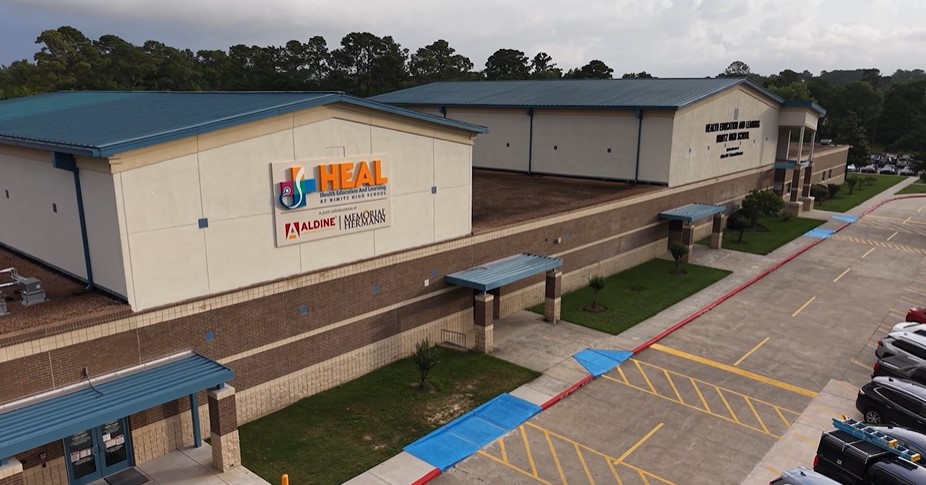
Across Houston, a new model for workforce development is taking shape—one that begins not in college or during onboarding, but in high school.
Through the HEAL (Health Education and Learning) High School partnership between Aldine Independent School District, Bloomberg Philanthropies, and Memorial Hermann, students are gaining unprecedented access to real healthcare environments, mentorship, industry-recognized certifications, college credit opportunities, and paid employment experiences years before entering the traditional workforce.
Three Memorial Hermann nursing leaders—Bryan Sisk, DNP, RN, NEA-BC, Senior Vice President and System Chief Nursing Executive; Juan Sanchez, DNP, RN, Vice President and Chief Nursing Officer at Memorial Hermann Northeast Hospital; and Beth Reimschissel, PhD, RN, CNL, Vice President and Chief Nursing Officer at Memorial Hermann Greater Heights Hospital—have been leaders in bringing this vision to life, ensuring students experience healthcare in ways that are meaningful, rigorous, and transformative.
A Program Designed With Community at the Center
Bryan Sisk describes HEAL as a model intentionally built by listening first.
“The program was developed by listening closely to students, families, educators, healthcare professionals, and community leaders who shared a vision of creating earlier and more equitable access to healthcare careers.”
HEAL High School integrates rigorous academics, industry-recognized certifications, college credit, clinical experiences, and mentorship into a seamless pathway that prepares students for both immediate employment and long-term career success.
What makes the model unique, Sisk notes, is its adaptability: “HEAL continues to evolve as we learn from students, educators, and healthcare teams, allowing us to continuously refine the model and share lessons learned in real time.”
This commitment to learning and iteration has created a dynamic educational pathway that reflects both community aspirations and healthcare workforce needs.
From Classroom to Clinical Environment: A Partnership That Opens Doors
At Memorial Hermann Northeast and Memorial Hermann Greater Heights Hospitals, Juan Sanchez and Beth Reimschissel have seen firsthand how early exposure changes students’ confidence, competence, and sense of belonging.
“Rather than simply learning about healthcare careers in a classroom setting, HEAL students go to school inside a fully functional hospital environment, work along Memorial Hermann employees during hospital based learning, and engage in a career-aligned contextualized educational pathways that integrates rigorous academics with meaningful, hands-on experiences across the healthcare continuum starting in the 9th grade.”
Memorial Hermann Northeast: The Anchor Hospital Behind HEAL
Since HEAL High School’s launch, Memorial Hermann Northeast Hospital has served as the anchor healthcare partner for the program, helping transform a bold workforce development vision into meaningful real-world experiences for students.
Under Juan Sanchez’s leadership, Northeast has played a key role in connecting students to clinical environments, healthcare professionals, and career development opportunities. Over the past two years, the hospital has partnered closely with educators and workforce leaders to help students build the skills, confidence, and understanding needed for future healthcare careers.
“As the anchor hospital partner for HEAL High School, we recognized early that our role went beyond providing observation opportunities. We had a responsibility to help students understand what it truly means to work in healthcare and to create experiences that build confidence, curiosity, and a sense of purpose.”
The Northeast team has helped create meaningful opportunities that continue to expand in support of students’ four-year journey, demonstrating the impact healthcare organizations can have when they invest early in developing future talent.
“When students can see themselves in our hospitals, connect with our teams, and understand that healthcare is a career path available to them, we’re not just developing future employees—we’re strengthening the communities we serve.”
In addition to Northeast’s foundational role, Memorial Hermann Greater Heights has expanded opportunities for students through freshman and sophomore clinical rotations across nursing, rehabilitation therapies, pharmacy, and healthcare administration.
The impact has been immediate and profound.
“Watching students progress from observers during clinical rotations to active contributors within our healthcare teams has reinforced my belief that experiential learning is one of the most powerful ways to prepare future healthcare professionals.”
For Reimschissel, HEAL represents more than workforce development—it reflects what is possible when nursing leaders are involved from the very beginning in designing innovative solutions to community challenges. She has been inspired by participating in a model where nursing had a seat at the table from inception, helping shape an educational pathway that not only prepares future healthcare professionals but creates a lasting legacy for the profession and the communities Memorial Hermann serves.
This partnership has now grown into something even more significant: hiring junior HEAL students as 16-year-old Youth Apprentices.
“We have had the privilege of employing our first cohort of HEAL High School students as Youth Apprentices, connecting students directly to entry-level healthcare roles while they are still in high school.”
Leadership That Removes Barriers, Not Standards
All three leaders emphasize that HEAL is not about lowering expectations, it is about expanding access.
Sisk reflects on his own nontraditional path into healthcare and the power of early exposure:
“Most of us can point to a person, experience, or mentor who influenced our career choice and helped us recognize our potential.”
He sees HEAL as a way to provide those pivotal experiences earlier, helping students make informed decisions and build resilience.
“We are not making the journey easier by reducing expectations; we are removing barriers that may prevent talented students from discovering what they can achieve.”
Reimschissel echoes this sentiment through her work placing Youth Apprentices in roles that build foundational skills and long-term career pathways.
“We were intentional in placing apprentices in roles and departments where they could build meaningful work experience and envision a future career pathway within our organization.”
The Ripple Effect: Students Who Inspire the Workforce
One of the most powerful outcomes of HEAL is the reciprocal inspiration it creates.
Sisk notes: “We often talk about inspiring the next generation, but I believe many of our clinicians, nurses, and leaders would tell you that the students inspire us just as much as we inspire them.”
Sanchez agrees. “Students bring a level of curiosity, optimism, and determination that is contagious. Their enthusiasm reminds our teams why we entered healthcare in the first place and reinforces the importance of investing in future generations.”
Reimschissel recently became an official mentor within the program, deepening her connection to students’ growth. “Whether through mentorship, clinical experiences, or employment opportunities, it has been incredibly rewarding to invest in the next generation of healthcare professionals and witness their growth, confidence, and commitment to serving others.”
A Call to Action for Healthcare Leaders
These leaders are united in their belief that healthcare professionals have a responsibility to invest upstream.
Sisk frames it as community-connected nursing: “Healthcare professionals have a unique responsibility and opportunity to shape the health of their communities far beyond the walls of our hospitals and clinics.”
His advice is clear: “Serve on advisory boards. Mentor students. Partner with schools. Advocate for workforce development programs.”
Reimschissel’s work demonstrates what is possible when organizations think differently about talent development—and act early.
Sanchez emphasizes that nursing is one of the most powerful forces for strengthening communities.
“When healthcare organizations, schools, and community leaders work together, we can create opportunities that change the trajectory of a student’s life while building the workforce our communities will need for generations to come.”
A Shared Vision for the Future
HEAL High School is more than a program; it is a blueprint for how healthcare organizations can partner with communities to build sustainable, equitable pathways into the profession.
Through leaders like Bryan Sisk, Juan Sanchez, and Beth Reimschissel, Memorial Hermann is demonstrating what becomes possible when healthcare, education, and community partners align around a shared purpose. Together, they are helping students discover their potential, creating opportunities that did not previously exist, and building a workforce that reflects the communities it will serve.
Their collective work sends a powerful message to healthcare leaders everywhere: when we invest in students today, we create a legacy of opportunity, strengthen our communities, and shape the future of healthcare for generations to come.