Nurse Board Stories
Leading with Purpose: How Strategic Nursing Leadership Shapes Governance
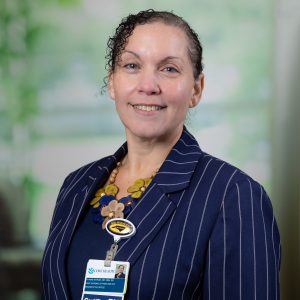 Strategic leadership is essential in today’s complex healthcare landscape, and nurses are uniquely equipped to bring that perspective into boardrooms and governance spaces. In this Q&A, Vi-Anne Antrum, NP, MBA, RN, NEA-NC, CENP, FACHE, shares how her experience has shaped her approach to leadership, influence, and service. Her insights highlight the power of nursing expertise in driving organizational strategy, strengthening community partnerships, and elevating the voice of nursing at the highest levels of decision-making.
Tell us about your organization and the work you do.
I serve as the Systemwide Chief Nursing Officer at Cone Health in Greensboro, North Carolina, where I lead nursing practice, strategy, policy, and nursing operations across the enterprise. My responsibilities include post-acute care, inpatient care management, respiratory care, and several other clinical and nonclinical service lines. I also have matrixed responsibility for advanced practice providers, patient experience, and rehabilitation services, which positions me at the center of strategic decision-making for the system. I regularly attend meetings of the Cone Health Board of Trustees and serve on both the Enterprise Strategy Council and the Enterprise Operating Council to ensure the nursing perspective informs our long-term direction.
What is your connection to board service? Which boards do you currently serve on, and are there other nurses serving alongside you?
I currently serve on several boards, including the North Carolina Organization of Nurse Leaders (NCONL), The Fisher Projects, Union Square Campus, Inc., Freedom City Church, and The Greensboro Police Foundation. I am also a Governor candidate for American College of Healthcare Executives (ACHE), with installation planned at ACHE Congress. With the exception of NCONL, I am the only nurse serving on these boards, which reinforces how essential it is for nurses to step into governance roles. I’m also proud that Cone Health has a dedicated nursing seat on its Board of Trustees, an important commitment to elevating the nursing voice at the highest level.
How do you typically become connected to board opportunities?
My board opportunities have come through a mix of pathways. Some were appointments where I represented my organization; others emerged from my personal passions and community involvement, and several required going through a competitive election process. Each experience has reminded me that visibility, relationship building, and a willingness to lead all play a role in opening doors.
How has your experience as a nurse shaped your contributions in the boardroom? Can you share an example?
As a nurse, I naturally think in terms of the greater good, systems impact, and what is possible, mindsets that are invaluable in governance. I bring a blend of creative problem-solving, fiduciary awareness, and relationship building to every board I serve on. One example that stands out is during the COVID19 pandemic, when I was asked to weigh in on public safety concerns related to police operations. My clinical and operational perspective helped guide strategic decisions that ensured the safety of everyone involved in a major public event.
What has been the hardest aspect of learning to serve on boards? How is board service different from working in healthcare?
One of the biggest adjustments for me (or anyone newly stepping into a Board seat) has been separating governance from day-to-day operations. In the boardroom, my role is to focus on fiduciary responsibility, long-term strategy, and organizational stewardship—not operational details. It requires discipline to stay out of the weeds and clarity about the role I’m there to play. Serving on a board also means serving as an ambassador for the organization, which adds another layer of responsibility and visibility.
In your view, what is the impact of nurses serving on boards?
Nurses have been the most trusted profession for 24 years, and that trust carries tremendous weight in governance. When nurses serve on boards, we bring strategic thinking, business acumen, and a deep understanding of people and systems. Our presence demonstrates that nursing leadership extends far beyond clinical care. I believe nurses strengthen every board we join because we lead with integrity, insight, and a commitment to improving the lives of the communities we serve.

The Nurses on Boards Coalition (NOBC) represents national nursing and other organizations working to improve the health of communities through the service of nurses on boards and other bodies.