Uncategorized
Q&A with Healing Politics: Empowering Nurses to Run and Lead
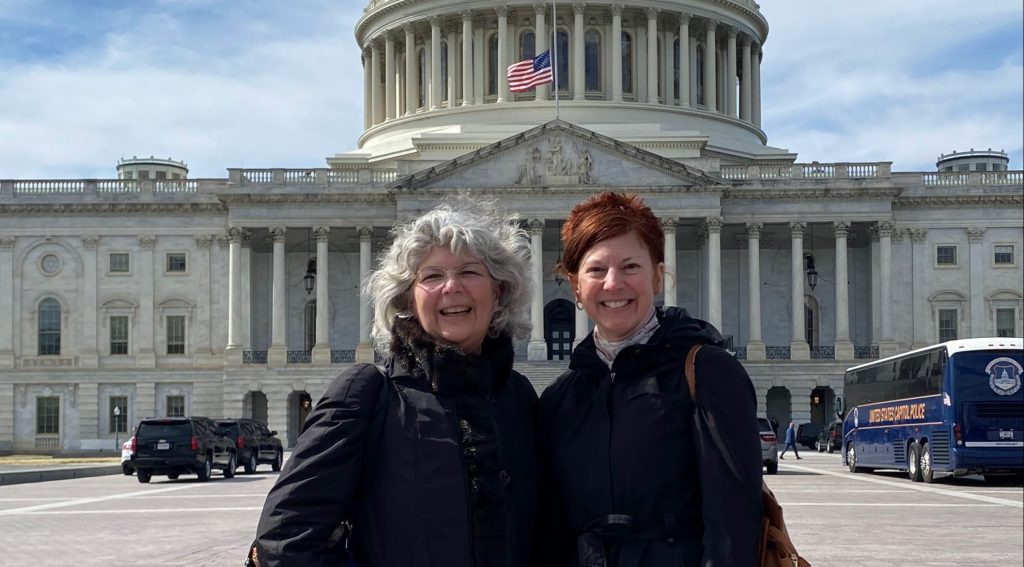
Nurses bring a perspective to governance that is grounded in care, advocacy, and real-world impact. In this Q&A series, we typically hear from nurse leaders who are shaping decisions that influence organizations, communities, and the profession through board service.
In this feature, we hear about how nurses can use their skills and knowledge to influence differently – through elected office. We hear from Lisa Summers, MSN, DrPH, FACNM as she describes how Healing Politics, the nonprofit nonpartisan organization she co-founded, works to inspire and train nurses and midwives to run for elected office up and down the ballot, and to build a culture of civic engagement within the professions.
Healing Politics has an interesting “birth story.” How did the organization come to be?
Healing Politics is “a DNP project with legs!” I was teaching health policy in the PhD and DNP programs at Yale University School of Nursing when, in 2018, two students came from North Carolina with a history that intrigued me: one had run for the North Carolina House of Representatives, and the other had been her campaign manager. I realized that in my decades of work in midwifery and nursing policy and advocacy, I could count on two hands the number of nurses I knew who had run for office. And I wondered, why is that? Why are nurses – the largest single segment of health care professions – so underrepresented? And what could we do about that?
These two students set out on DNP projects that culminated in the creation of the first Campaign School for Nurses & Midwives, which was set to be held in New Haven, Connecticut in May of 2020. When the pandemic forced its cancellation, we vowed to continue the effort and formed Healing Politics as a nonpartisan, nonprofit educational organization.
You say nurses are underrepresented. Why does that matter?
Although they have become more diverse in recent years, our legislative bodies are filled primarily with lawyers and businesspeople, who are most often white, and older and wealthier than the communities they represent. Political scientists have shown us that a more diverse elected body produces better public policy. Nurses can bring “boots on the ground” knowledge of the health care industry. And because there is “health in all policy” nurses can bring a unique perspective to all types of legislation, including education, transportation, and the environment.
What do we know about the number of nurses in elected office?
Only three nurses serve in the US House of Representatives. A nurse has never served in the US Senate. There are 86 nurses serving in state legislatures, but there are 10 states that do not have a single nurse in their legislature. When it comes to the very important “down ballot” positions – school board, city council, county council, coroner, sheriff – we don’t have exact numbers, but we know it’s not enough!
What is the mission of Healing Politics, and how does that align with NOBC?
Our missions are perfectly aligned! NOBC works to “improve the health of communities through the service of nurses on board and other governing bodies.” Healing Politics builds on that work to “inspire, motivate, recruit and train nurses and midwives to run for elected office up and down the ballot while building a culture of civic engagement within the professions.”
In what ways do the skills and abilities of nurses prepare them to run and serve in elected office?
Nursing experience, especially in nursing leadership and board service, provides insight and skills that provide a solid foundation for public service in elected office. (Many of these are discussed in prior interviews about board service!)
- The ability to form and lead teams. In healthcare, we become accustomed to multidisciplinary teamwork. Whether the nurse is leading a small team of individuals providing direct patient care, or teams of hundreds in a large healthcare system, we are adept at leveraging diverse skills and cultivating a supportive, respectful culture.
- Negotiating skills. Teamwork requires collaboration and negotiation, and nurses do this in big and small ways every day.
- Evidence-Based Decision Making. Nursing teaches us to assess complex situations, identify problems, and implement solutions under pressure. We depend on data and science to drive our decision-making.
- Strong communication Nursing demands that we learn to communicate effectively, often translating complex ideas into language targeted at a particular individual or group.
- Calm in a crisis. Our team building and critical thinking skills are often developed in crisis situations with individuals who are experiencing trauma and stress.
- Nurses are famously creative in developing new ways to solve problems and improve care. Nurses bring flexibility and persistence to a mindset that goes beyond technical skills.
- Grounded in ethics. We are sometimes asked if political engagement is appropriate or acceptable in our profession. Not only is it acceptable, but it is also explicitly addressed in our Code of Ethics. From being an informed voter to running for office, we are called to play a role “in every level of the democratic process.”
Readers can surely add to this list, thinking about the skills they bring to the boards they serve.
What work do you do to carry out your mission?
Our signature event is the Campaign School for Nurses & Midwives, a 3-day immersive training experience designed for nurses and midwives who are ready to explore running for elected office, working on a campaign, or managing one. The 2026 Campaign School will be held July 30 – August 2 in Durham NC and applications are open!
We know only a small percentage of nurses are ready for this step, so we hold monthly online education events that are designed for nurses who want to become more civically and politically engaged. (One of these events, in 2024, was on the importance of board service, with a presentation by NOBC!)
We publish a monthly newsletter that includes information about those events and highlights a nurse in elected office because “you have to see it to be it.” We are developing a community of nurses working as Healing Politics liaisons at the state level and have a growing following on social media (especially LinkedIn).
We partner with other groups who have a similar mission, like Vot-ER and Power the Polls. On March 31 we will observe National Run for Office Day with Run for Something Civics.
For nurses who are not going to run for office, what can they do to be more politically engaged and increase the number of nurses in elected office?
There is a role for every nurse! Maintaining membership in your professional organizations and joining advocacy days in the state capital and in DC are ways to network with politically active nurses and to learn the ropes.
When it comes to political campaigns – so important in this year of the midterm elections – there are many ways to be engaged from “behind the scenes” work to door knocking and making phone calls.
Financial contributions – including “small dollar donors” are important to fuel campaigns.
Think of nurses you’d like to see in elected office and encourage them – that personal tap on the shoulder is what it takes.
What are the barriers to getting more nurses in elected office?
We can start with awareness! I would guess many of your readers, who may have grown to see themselves as effective board members, have not thought about running for elected office. NOBC members can help change that – encouraging nurses to bring the skills they use in the boardroom to elected office.
It takes time and money to run a campaign and to serve in office; resources that are often in short supply for nurses. We’re the largest health profession which, in theory, means any nurse running for office has 4.7 million colleagues that can help with phone calls, door knocking, or small dollar donations. The “behind the scenes” help mentioned earlier could be helping a nurse candidate by picking up their child from school or making dinner when they have a campaign event to attend.
Workplace concerns might also pose a challenge, and Healing Politics is working to develop a toolkit to inform and assist employers when a nurse in their organization wants to run for office.
Sometimes nurses lack political knowledge and “just don’t know the right questions to ask” to get started. At Healing Politics, we structure our programs to address these barriers, including an online program we offer every quarter, “So you’re thinking of running for office? 13 questions to ask yourself.”
In your opinion, what is the IMPACT of having more nurses in elected office?
I mentioned earlier that political scientists have shown us that a more diverse elected body produces better public policy, and we have heard so many stories from nurses about how their input had an impact on legislation – from Congress to the school board. North Carolina Senator Gale Adcock, an experienced nurse legislator who serves on our Campaign School faculty, often says that although a bill may not have her name on it, it has her fingerprints on it. Nurses ask questions, raise issues, and make connections that improve any policy – not just healthcare policy.
With more nurses serving in elected office, our impact would be even greater and we invite all nurses to join us in these efforts to increase the representation of nurses in elected office.

The Nurses on Boards Coalition (NOBC) represents national nursing and other organizations working to improve the health of communities through the service of nurses on boards and other bodies.